


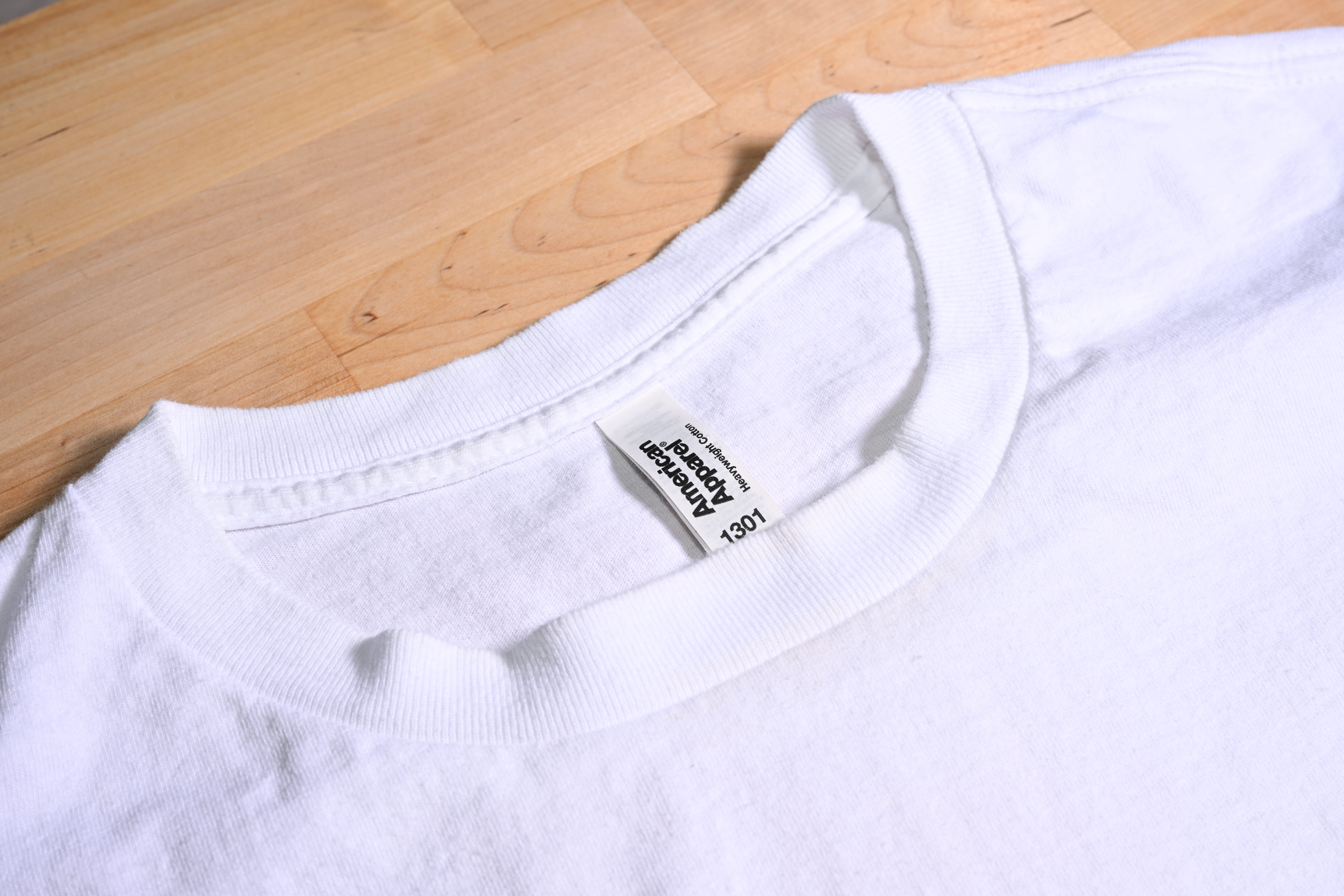
I feel a bit bad for judging this XL G1301 on terms it’s not meant for. It’s designed to be chucked in the dryer and last a year or so. When I conceived of a T-shirt review series, I thought it would partly be an exploration of what happens to cheap shirts when they’re treated extra nicely. I thought I’d be reinforcing practices that made cheap clothes more comfortable and last longer. Sounds nice, but it breaks down at this kind of collar I guess. It sticks pretty much straight up 4 washes in. I don’t love the look. A machine dryer would probably shrink that collar back down, but that’s not part of the test regimen.
From what I can tell this reflects my anecdotal observations of Asian Airbnbs vs US Homes. Line drying is popular in Asia, and dryer drying is more popular in the USA. Dryer ownership is about 80% in the USA, 35% in Japan and less than 5% throughout much of Asia. Asia broadly seems to care more about the washer than the dryer. By the standards of asian laundry, line drying is the expectation.
https://link.springer.com/article/10.1186/s40691-018-0135-3
https://pmc.ncbi.nlm.nih.gov/articles/PMC7540867/
Many of the items I’ve reviewed are designed in Japan and intended to be line dried. It’s possible cold washing might be extra on some of these bad boys, but the Whitesville 2-Pack Tees require it. I’m pretty confident that following this gentler process will extend the longevity of American Apparel and Gildan Tees, but it might also be part of their awkward fit problems.
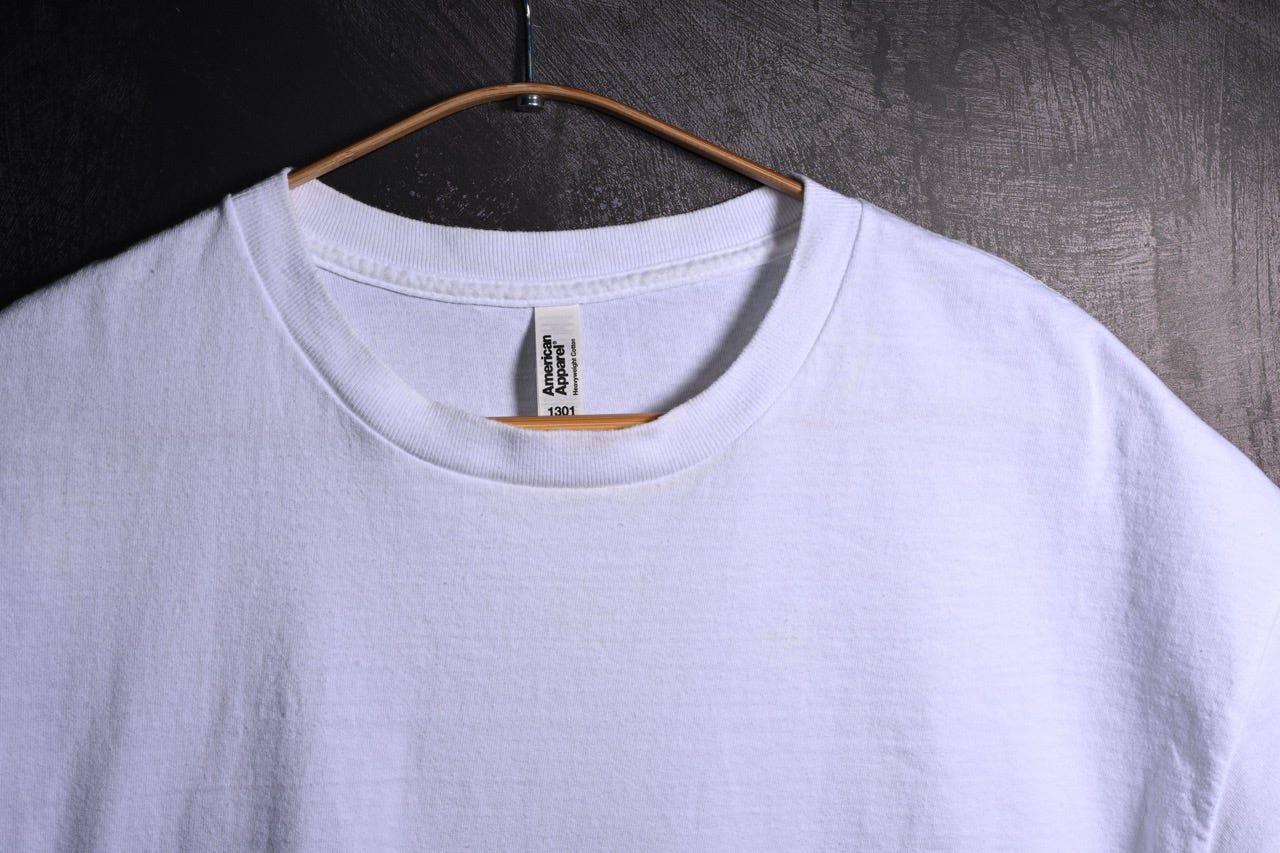
I don’t see myself ever taking on a project where I purposely mistreat multiple $100+ shirts in a machine dryer to see how favorably cheap american tees compare, but I think you should be aware of differences between the intended and test processes. I think the lesson here is that care instructions are baked into the design of the clothing we wear, and following them gives them the best chance of looking good.
A White American Apparel G1301 is a lightweight blank. Fit enough not to ruin your brand and inexpensive enough at retail to make a few bucks on your merch table. It’s serviceably soft and stitched. It’s not entirely formless, but it’s got plenty of space for most body types. Like the Gildan G2000, to achieve a flattering fitted look you’d have to size down and be slender. Unlike that G2000, it doesn’t shrink and warp as much, wear to wear.
It’s that last detail that makes the G1301 a buy for me. It’s consistently good enough for the price to justify buying. I found it to be soft pre-wash and during wash one. Not so soft after wash two, and back to soft after wash 3. I cold washed and line dried it, because it’s getting the same treatment as the nice stuff for science and it improves longevity. It might even improve the fabric feel, but that’s my anecdotal take. Something to look at in another test. The sleeves post shrink aren’t as wide as the 085-CVT Printstar. I typically have to cuff those sleeves, which is a look not everyone likes.
That said, I tend to get annoyed with clothing that deteriorates rapidly, and I like to do what I can to prolong an item’s death. I’m knowingly deviating from the intended care practice. I think it’s as important to buy clothes that you’re willing to care for as instructed. At 19, every item of clothing I owned went into the dryer and fit tightly. It was 2011 and wrinkles couldn’t appear if the item was stretched within an inch of its life.

All this is to say, I don’t think the American Apparel G1301 is for me. I think it’s objectively a good value, and I think you should buy it instead of the Gildan G2000 if you’re considering a dirt-cheap shirt, but it’s not the kind of item I enjoy owning. I don’t want to have to choose between my clothes looking their best and longevity. I want line drying to contribute to both.